How Roofing Companies Can Win More Leads in Fort Lauderdale


In This Article
- Why roofing lead generation requires a system, not just traffic
- Optimizing your Google Business Profile for Fort Lauderdale search terms
- Building trust with real roofing project photos and certifications
- Turning your website into a high-converting lead generation asset
- Designing city-specific location pages and service pages in Broward County
- Implementing call tracking and CRM integration to measure closed jobs
Ask any roofing contractor in Fort Lauderdale what their number one business need is, and the answer is almost always the same: 'We need more leads.' Homeowners and commercial property managers face daily challenges with South Florida's intense weather, from baking summer sun to sudden torrential downpours and hurricane-force winds. For roofing companies, this constant weather stress creates a high-volume, highly competitive market. Yet, many business owners believe that generating more traffic to their website or ranking at the top of Google for 'roofing marketing Fort Lauderdale' is the complete solution. In reality, having visibility is only the first step. If your company ranks high but fails to build trust, or if your website is slow and confusing, that expensive traffic will simply click away to a competitor.
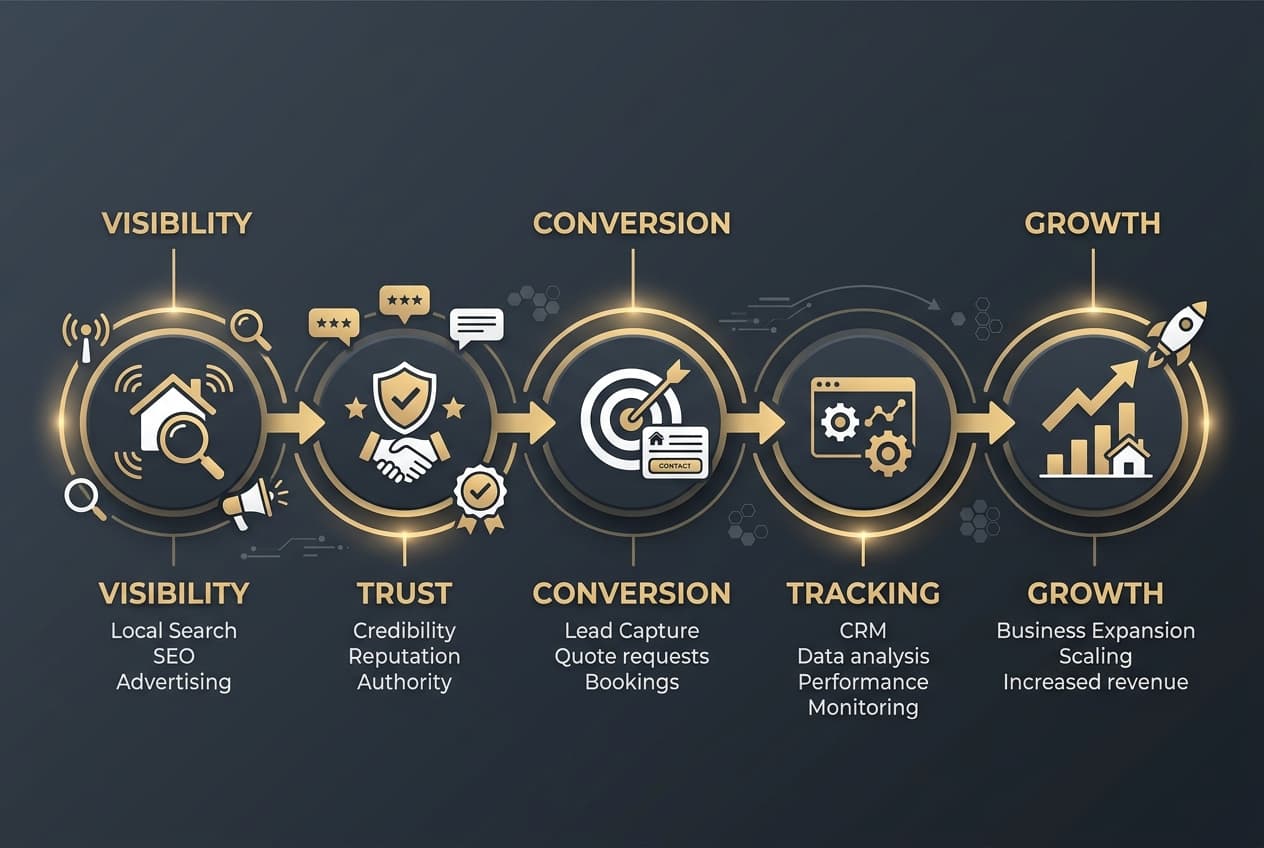
Successful roofing digital marketing is not a single tactic like running search ads or posting on social media. Instead, it is an interconnected local lead-generation system. To build a highly profitable roofing business in Broward County, you must coordinate five distinct stages: visibility (getting found when someone has a leak or needs a reroof), trust (proving your credentials and quality before they contact you), conversion (making it effortless to request a quote or call), tracking (monitoring which campaigns create actual closed sales), and growth (reinvesting data to scale). In this guide, we will break down each phase of this framework, showing you how to build a dominant, localized roofing contractor marketing strategy that generates qualified roofing leads Fort Lauderdale homeowners are ready to buy.
1. Get Found When Fort Lauderdale Homeowners Need a Roofer
When a homeowner discovers a wet spot on their ceiling or notices curled shingles after a storm, they do not search for national directories or wait for print flyers. They pull out their phones and search for immediate local solutions. Modern customer discovery for home services happens across multiple search surfaces, primarily Google Search, Google Maps, and local organic results. In addition, many customers who receive a personal referral will still search the company's name online to check reviews, read case studies, and inspect project photos before making contact. Therefore, establishing a broad local SEO footprint is crucial to capture these high-intent local roofing leads.
Build a Strong Google Business Profile
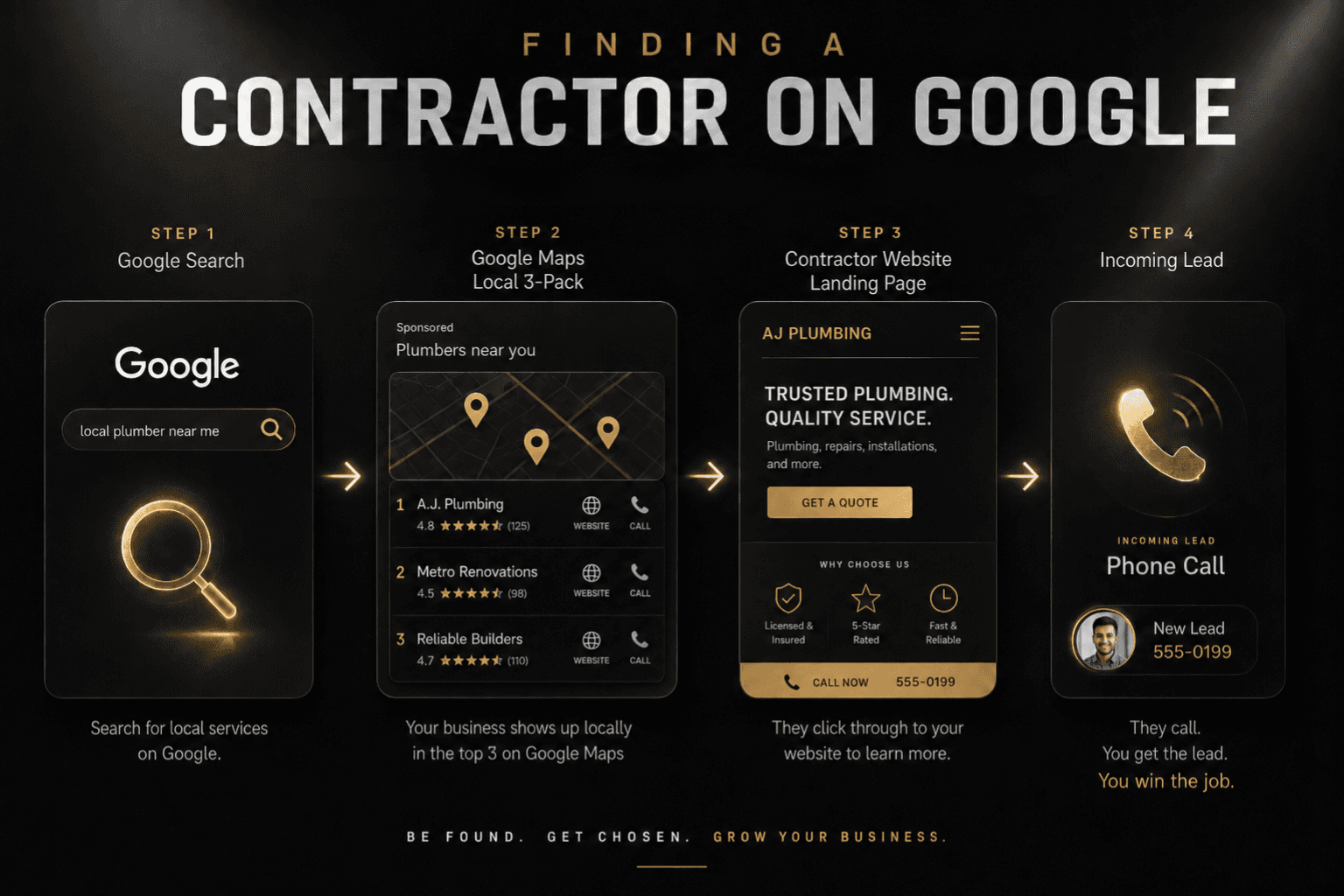
For local SEO for roofers, your Google Business Profile (GBP) is the absolute core of your visibility. When homeowners search for 'Fort Lauderdale roofing marketing' or 'roofing contractor near me,' Google displays the Local 3-Pack—the map listings at the very top of search results. To rank in this prime real estate, you must optimize every aspect of your GBP. Ensure your primary business category is set precisely to 'Roofing Contractor.' Add specific subcategories like 'Waterproofing service' or 'Siding contractor' if you offer those services, but keep your primary category focused on roofing.
Populate your profile with real project photography, team headshots, and consistent updates showing your crews active on local job sites in neighborhoods like Las Olas, Victoria Park, or Rio Vista. Regularly publishing project updates directly on your profile signals to Google that your business is active. Furthermore, ensure your service areas are explicitly defined by zip codes and municipalities within Broward County, rather than a generic radius. Note that while Google Business Profile provides basic call buttons, it discontinued its built-in call history feature in 2024. To track which calls come from your profile, you should implement third-party call tracking lines integrated directly with your CRM instead of relying on Google's outdated data.
Build Local SEO Beyond Your Homepage
Many roofing companies make the mistake of optimizing only their homepage. While your homepage is important, a single generic page cannot target the wide array of services you offer or the distinct sub-markets you serve. To rank for high-intent keywords like 'metal roofing Fort Lauderdale' or 'roof repair Broward County,' you must build dedicated roofing service pages and location landing pages. Each primary service—such as roof replacement, roof repair, tile roofing, metal roofing, shingle roofing, and commercial roofing—should have its own page with rich, helpful content describing materials, installation processes, warranties, and local building code compliance. This structured service-area architecture builds topical relevance, making it much easier for search engines to match your site with specific local search queries.
Build Visibility Across Fort Lauderdale and Broward County
Geographic relevance is the secret to dominating local search. Rather than creating thin, duplicate pages that copy-paste the same text with different city names, build genuinely useful location pages for major municipalities in Broward County, including Hollywood, Davie, Plantation, Cooper City, Weston, Pembroke Pines, and Coral Springs. A valuable location page includes details about roofing projects completed in that specific area, local permit requirements, architectural styles common to the neighborhood, local client testimonials, and FAQs specific to that city's regulations. This localized content signals to Google that you are a legitimate local operator, boosting your overall map prominence and organic search presence.
Establish a robust internal linking structure between your service pages, location pages, and your Google Business Profile. For instance, linking your Fort Lauderdale location page directly to your main Google Business Profile optimization service page allows search authority to flow naturally across your digital assets.
2. Build Trust Before the Homeowner Ever Calls
Roofing projects are high-ticket, high-stress investments. Whether a homeowner needs a minor repair or a complete roof replacement, they want to be absolutely sure they are hiring a licensed, reputable professional. Because of this, most prospects will research your company thoroughly before ever picking up the phone. They look at reviews, verify your credentials, inspect your project gallery, and evaluate your brand's professionalism. Building trust is not a passive task; it must be actively engineered into your digital presence to convert interest into a sales opportunity.
Your Website Is Part of the Sales Process
Your website design is the digital front door of your business. It is often the first touchpoint where a prospect evaluates your credibility. If your site looks outdated, uses low-quality stock photos, or lacks clear trust signals, it will raise immediate red flags. A premium contractor website design functions as an active part of the sales process. It must reassure visitors that you are an established, professional local contractor. The design should feel modern, using high-contrast typography like Oswald for headings and Inter for body text, generous whitespace, and a clean, luxury color scheme that represents high-quality workmanship.

Show Real Roofing Work
Stock photos of perfect, smiling construction workers from other parts of the country do not build trust. In fact, savvy homeowners can spot them instantly and will question your authenticity. To build real credibility, showcase high-resolution project photography of your actual crews working on real roofs in Fort Lauderdale. Use before-and-after project photos, aerial drone shots that display the scale and quality of your work, and video walkthroughs of completed shingle, tile, or metal roofs. Showing your team on-site, wearing branded uniforms, and working with professional equipment establishes immediate real-world proof of your capability.
Make Trust Easy to Verify
Make your licensing, insurance, manufacturer relationships, and customer feedback prominent. If you are a GAF Master Elite Contractor, an Owens Corning Preferred Contractor, or have specific certifications from major roofing manufacturers, display these badges on your homepage and service pages. Include direct links to verify your licensing status with the Florida Department of Business and Professional Regulation (DBPR). Integrate real reviews from Google and Yelp directly onto your site so homeowners can read authentic testimonials from their neighbors in Broward County. Never fabricate reviews or partnerships; honest trust signals are far more effective at building long-term local relationships.
3. Turn Your Roofing Website Into a Lead Generation Asset
Generating website traffic is pointless if those visitors do not take action. Many roofing companies spend thousands of dollars on advertising and SEO only to send traffic to a site that converts at less than one percent. To turn your digital presence into a true contractor lead generation asset, your website must be engineered for conversion. This means designing clear pathways, optimizing load speeds, providing obvious calls to action, and removing any friction that prevents a homeowner from contacting you.
Make the Next Step Obvious
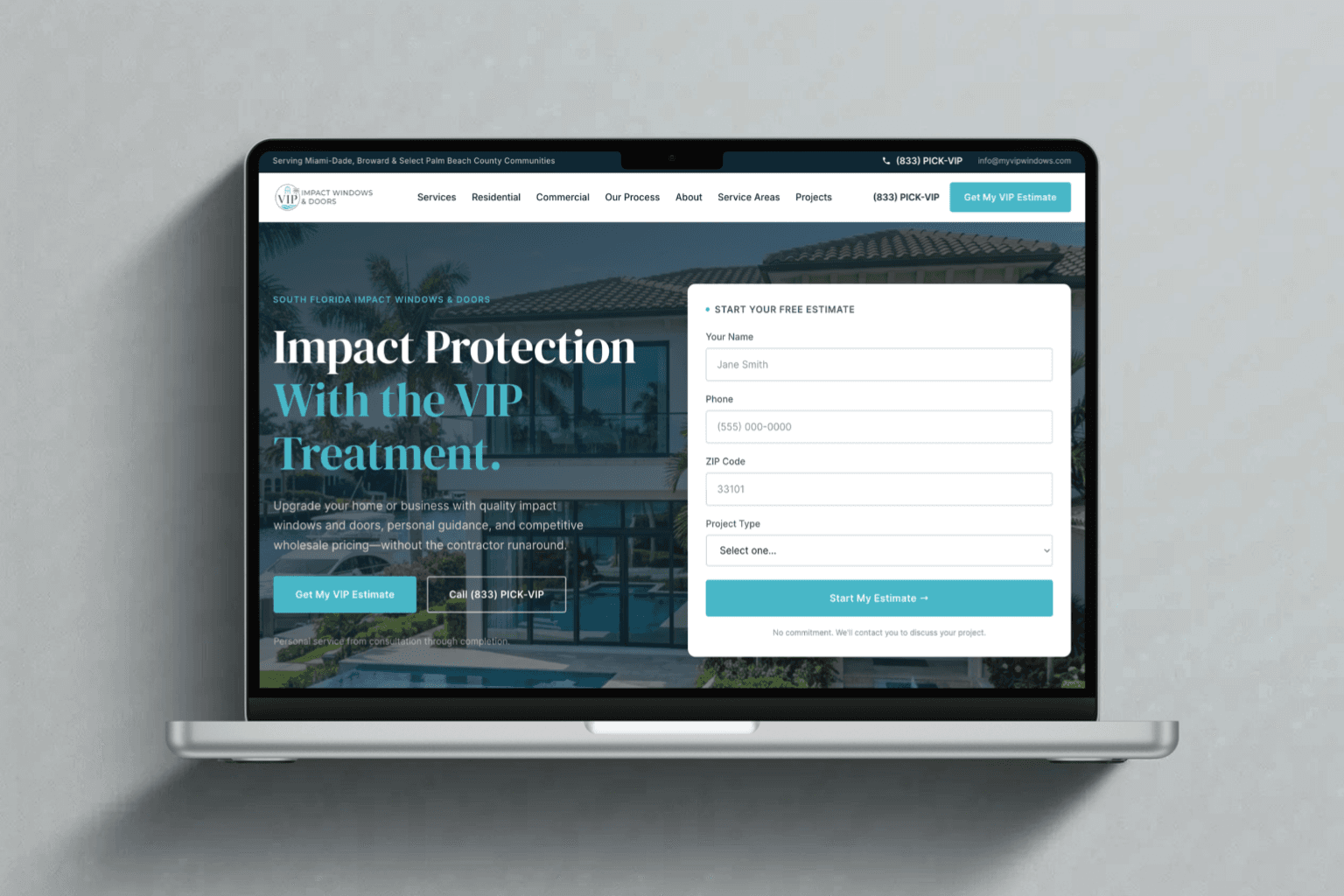
Every page on your website should guide visitors toward a single logical action. Do not overwhelm them with too many choices. If they are looking at a roof replacement page, the next step should be to request a free estimate. If they are on an emergency repair page, a click-to-call phone number should be front and center. Provide high-contrast, stylized call-to-action (CTA) buttons that tell visitors exactly what to do next. Examples include 'Book Your Free Roof Inspection' or 'Call Our Fort Lauderdale Office.' Offering financing information, such as '$0 down and flexible monthly payments,' is another powerful way to encourage visitors to take the next step.
Design for Mobile Roofing Searches
The vast majority of homeowners searching for roofing services do so from their mobile devices. During hurricane season or severe weather events, mobile traffic spikes even higher as homeowners inspect leaks and search for immediate assistance. If your website design is not fully optimized for mobile screens, you are losing leads. A mobile-first design means ensuring headlines are readable without zooming, text doesn't overflow, forms are simple to fill out with a thumb, tap targets are large enough, and call buttons are sticky and clickable. If a user has to search for your phone number or struggle with a tiny form on their phone, they will click back to Google and find another roofer.
Remove Conversion Friction
Friction is anything that makes it difficult or annoying for a prospect to contact you. Examples of conversion friction include long forms that ask for unnecessary personal details, slow page load times, hidden phone numbers, and confusing navigation. Clean up your contact pathways. Limit estimate forms to essential information: name, phone, email, address, and a brief description of the project. Ensure your site loads in under two seconds. Research shows that every additional second of load time significantly drops your conversion rate. By optimizing images, using clean code, and deploying fast hosting, you create a seamless experience that encourages homeowners to connect.
4. Build a Fort Lauderdale-Specific SEO Footprint
To build a sustainable flow of organic leads, you must establish local topical authority. This means writing high-quality, in-depth content that addresses the specific needs, questions, and regulations of the Fort Lauderdale roofing market. When search engines crawl your site and find comprehensive resources on South Florida roofing requirements, they reward you with higher visibility across Broward County.
Create Dedicated Roofing Service Content
In Fort Lauderdale, roofing is highly specialized due to weather conditions and architectural styles. Create separate, comprehensive landing pages for roof replacement, roof repair, metal roofing, tile roofing, shingle roofing, and commercial roofing. On these pages, explain the specific benefits of each material, how they handle South Florida heat and hurricane winds, their typical lifespan in a coastal climate, and maintenance tips. Providing detailed educational content shows prospects you are an expert and gives search engines the specific keyword context they need to rank your site.
Build Useful Location Pages
We previously discussed service-area location pages, but it is important to emphasize that these pages must offer genuine value. Do not write generic boilerplate content. On your Fort Lauderdale roofing page, discuss the High Velocity Hurricane Zone (HVHZ) requirements, Broward County permitting timelines, and local building codes. Showcase roofing projects you have completed in neighborhoods like Coral Ridge, Tarpon River, or Sailboat Bend. Include local customer reviews and answer FAQs about local roofing ordinances. Genuinely useful geo-targeted pages build high local search authority and rank better in the Google Maps Local 3-Pack.
Create Content Around Real Customer Questions
Before hiring a roofer, homeowners have many questions. You can capture high-intent search traffic by writing resource articles that answer these questions directly. Examples of search queries include: 'How much does a new roof cost in Fort Lauderdale?', 'What is the best roofing material for South Florida weather?', 'How do I know if my roof has hurricane damage?', or 'How long does a roofing permit take in Broward County?'. Writing clear, informative guides that answer these questions positions your brand as a trusted advisor, capturing prospects early in their buyer journey.
5. Don't Send Paid Traffic Into a Leaky Funnel
Many roofing contractors invest heavily in paid search advertising, such as Google Ads or Local Services Ads, hoping to bypass the time it takes to build organic rankings. While paid advertising is a valuable source of traffic, it cannot compensate for a weak digital foundation. If you send expensive clicks to a website that is slow, confusing, or lacks trust signals, you are simply wasting your marketing budget. Paid traffic cannot convert on a leaky website.
To get a high return on investment from paid search, you must align every stage of the funnel: Search Intent → Ad Copy → Dedicated Landing Page → Call to Action → Lead Follow-Up. If a homeowner searches for 'emergency tile roof repair Fort Lauderdale,' your ad should lead to a landing page dedicated specifically to tile roof repairs in Fort Lauderdale, featuring a clear click-to-call button. Sending paid clicks to your general homepage forces users to dig for the information they need, leading to high bounce rates. Ensure your website's conversion infrastructure is fully optimized before launching paid campaigns to maximize the value of every click.
6. Track Which Leads Actually Turn Into Roofing Jobs
You cannot manage what you do not measure. If you do not track the sources of your incoming phone calls and form submissions, you cannot know which marketing channels are actually driving revenue. A company might see an increase in overall website traffic or phone calls, but without detailed tracking, they cannot distinguish between low-value sales solicitations, small repairs, and high-value reroof projects. Tracking is critical to allocate your budget effectively and scale your business.
Do not rely on Google Business Profile for complete call history records. Google officially discontinued the built-in Business Profile call history feature in 2024. For accurate lead attribution, you must implement third-party call tracking software integrated with your website and CRM.
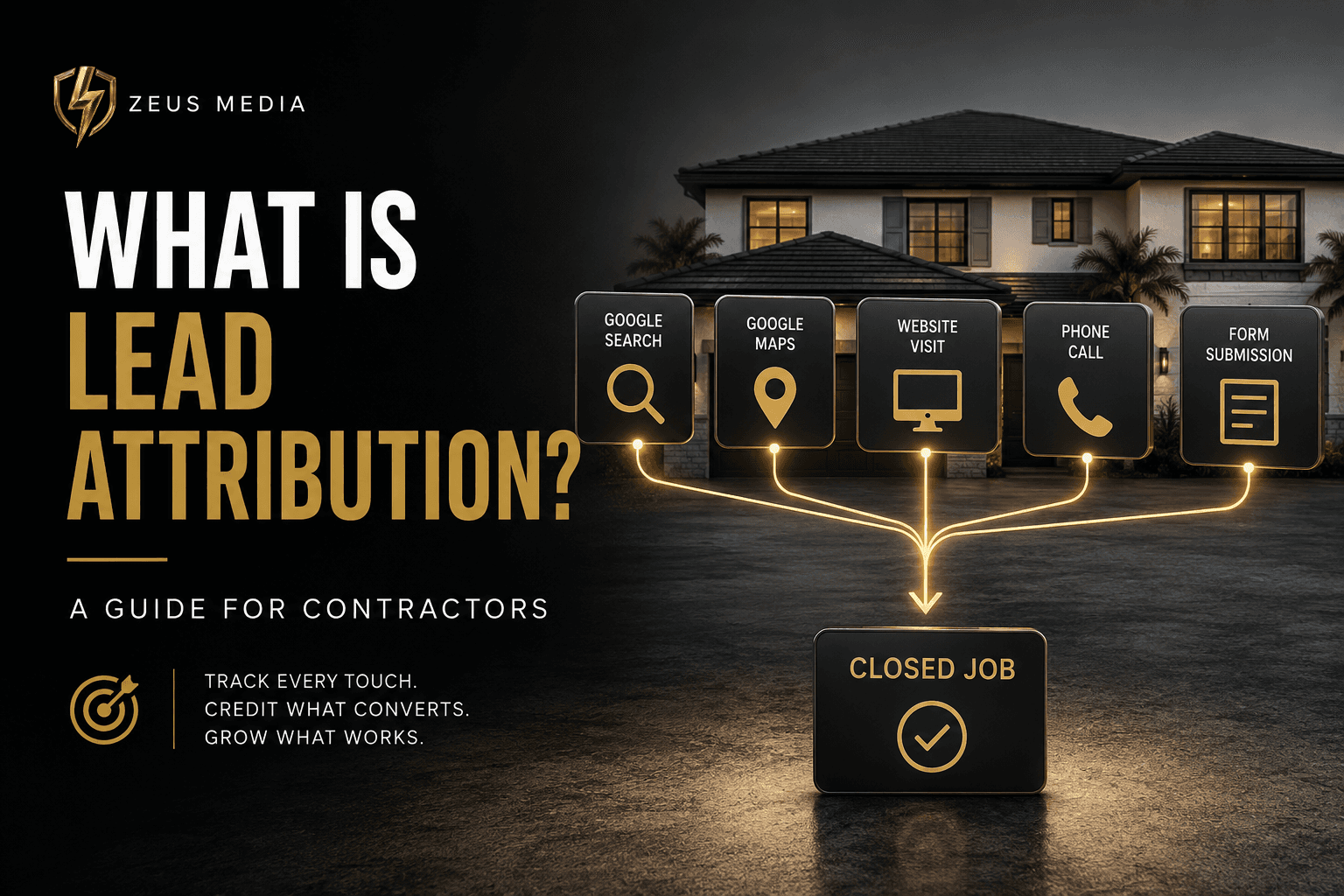
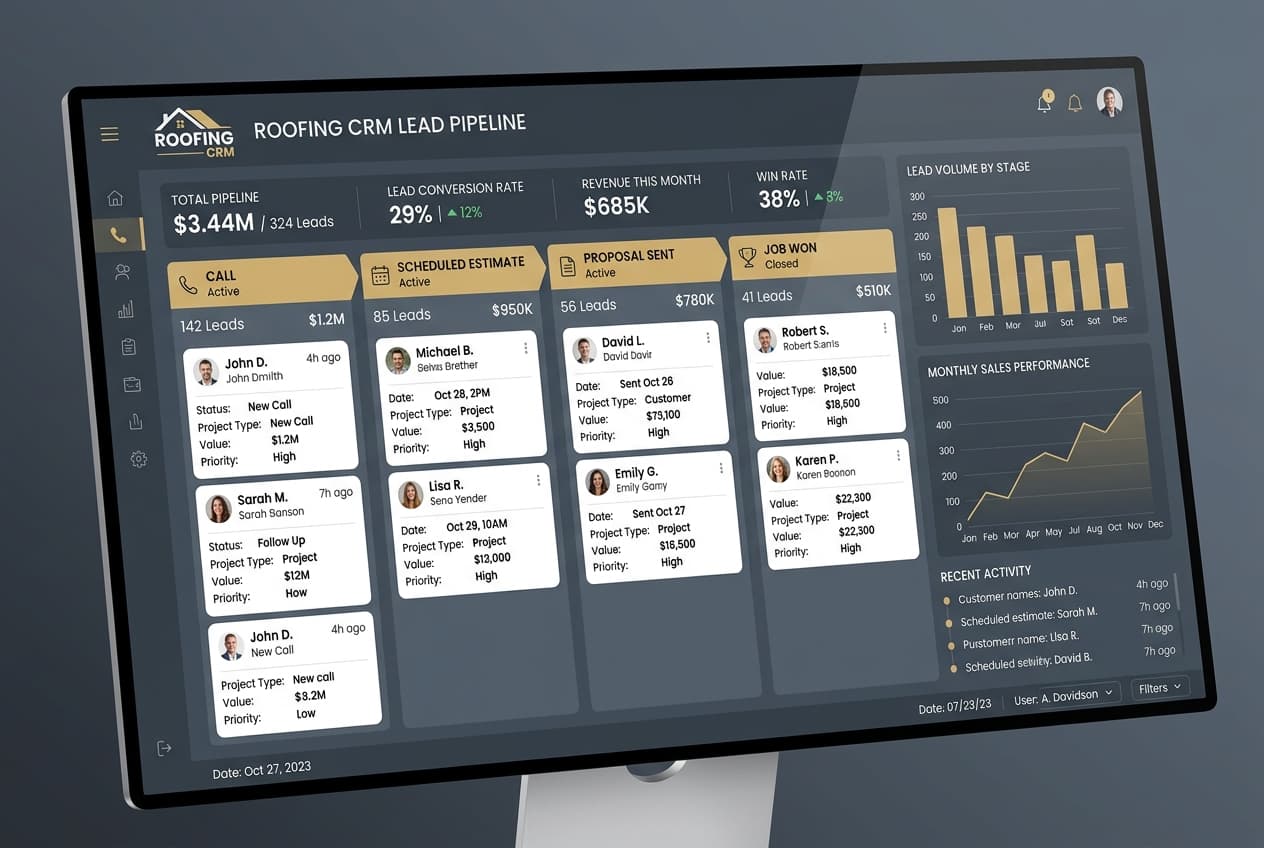
To build a complete tracking loop, implement a system that measures the entire customer journey: Call/Form Submit → Scheduled Appointment → On-Site Estimate → Sent Proposal → Closed Job → Total Revenue. Use dynamic number insertion (DNI) to show unique phone numbers to visitors based on how they discovered your site (e.g. Google organic search, local SEO, Google Ads, or direct traffic). This allows your call tracking software to attribute each phone call to its exact marketing source. Connecting this call tracking data with your CRM—like Jobber, BuilderTrend, or ServiceTitan—allows you to trace closed jobs and actual revenue back to specific campaigns, showing you exactly which SEO keywords or local listings generate your highest-paying projects.
7. Build a Roofing Marketing System Instead of Chasing Leads
Many contractors operate in a constant cycle of lead chasing: they pay for shared leads on directories, bid against ten other roofers for a single job, and experience extreme seasonal revenue swings. The most successful Fort Lauderdale roofing companies break this cycle by building an integrated roofing marketing system. When your Google Business Profile, local SEO, website design, conversion optimization, and tracking loops work together, they create a compounding effect that builds long-term authority.
Improving a single element of your marketing can help, but the largest gains come from fixing weaknesses across the entire customer journey. For example, ranking in the map pack (visibility) is much more valuable when your website uses real project photos (trust), features a prominent quote form (conversion), tracks the lead's source (tracking), and your team follows up within minutes (sales). By treating your digital marketing as a unified system rather than a series of disconnected tactics, you establish a predictable stream of inbound opportunities that belong entirely to your company.
What Makes Fort Lauderdale Roofing Marketing Different?
Fort Lauderdale is a unique and challenging market for roofing contractors. To stand out and build a successful local presence, you must address South Florida's specific geographic, climate, and regulatory conditions. This requires showing deep local knowledge in your marketing copy and project presentations.
- Severe Weather and Hurricane Prep: Fort Lauderdale is located in a High Velocity Hurricane Zone (HVHZ). Roofing systems must comply with strict wind load and impact resistance standards under the Florida Building Code (FBC). Highlighting hurricane preparation, wind mitigation inspections, and storm damage repair expertise is essential to capture local interest.
- Coastal Climate Conditions: The combination of intense tropical sun, high humidity, salt air from the Atlantic Ocean, and heavy rain creates unique wear and tear. Discussing how different materials—like concrete tile, standing seam metal, or high-grade architectural shingles—perform under these specific conditions builds strong trust.
- High-Value Residential Properties: Fort Lauderdale features many high-end waterfront estates in neighborhoods like Las Olas Isles, Harbor Beach, and Coral Ridge. Marketing to these affluent homeowners requires premium website aesthetics, clear warranties, professional project showcases, and a focus on premium materials like clay tile and custom metal roofing.
- Strict Building Codes and Permitting: Broward County and the City of Fort Lauderdale have strict permitting processes and inspections. Discussing compliance with these local regulations shows homeowners that you handle all administrative requirements professionally, reducing stress and build times.
A Simple Roofing Lead Generation Checklist
To evaluate your current digital presence and identify opportunities for growth, use this simple checklist. Review these questions with your team to see where your system needs improvement:
- Can homeowners find your company on Google when searching for local roofing services?
- Is your Google Business Profile complete, verified, and set to the correct primary category?
- Does your website clearly explain why local customers should choose you over regional competitors?
- Does your website load in under two seconds and work flawlessly on mobile screens?
- Are real projects and local before-and-after photos displayed prominently on your site?
- Are verified customer reviews easy to find and read on your landing pages?
- Do your major services (replacement, repair, metal, tile) have dedicated service pages?
- Do your priority markets in Broward County have useful local location pages?
- Are incoming phone calls and estimate forms tracked to identify their marketing source?
- Can closed roofing contracts and revenue be traced back to specific campaigns in your CRM?
- Does your team follow up with new inbound leads consistently and within five minutes?
How Zeus Media Approaches Roofing Company Growth
At Zeus Media, we do not believe in generic marketing packages or buying shared leads. We help roofing contractors build proprietary marketing assets that generate high-value, exclusive leads. Our approach is based on evaluating and optimizing every stage of the local customer journey: visibility, trust, conversion, tracking, and growth.
We evaluate your website architecture, branding, local SEO, Google Business Profile prominence, conversion pathways, and lead tracking system to build a customized growth blueprint. By engineering high-performance websites and establishing local search authority, we help you build a dominant online presence that drives consistent revenue. While we do not make false guarantees about rankings or lead volume, we are committed to building a transparent, trackable system that delivers real business growth.
Need Help Improving Your Visibility?
Get a free contractor growth audit and see exactly where your website, SEO, and Google Business Profile can improve.
Book a Strategy CallFrequently Asked Questions
How can a roofing company get more leads in Fort Lauderdale?
Does SEO work for roofing companies?
How can roofers rank higher on Google Maps?
Does a roofing company need location pages?
What should a roofing website include?
How should roofing companies track leads?
Is Google Business Profile important for roofing companies?
Should roofing companies invest in their website before advertising?
Joshua Johnson specializes in contractor marketing across South Florida, helping roofing, HVAC, and remodeling companies rank higher and generate more leads through local SEO and conversion-focused websites.
Related Resources