How AI Is Changing South Florida Home Service Businesses


In This Article
- Challenges of fragmented contractor software
- Leviosa Labs' AI operating system features
- Improving sales intelligence and response times
- Automating multi-jurisdiction permitting workflows
- Unifying customer interactions with an AI CRM
- Optimizing scheduling and operations intelligence
- Connecting AI systems with marketing foundations
South Florida is one of the most competitive home-service markets in the country.
Homeowners have no shortage of options when they need a roofing company, HVAC contractor, solar installer, plumber, electrician, remodeler, or general contractor. A business may offer excellent service and still lose opportunities because its sales process is too slow, its permitting workflow is disorganized, or its team is juggling too many disconnected systems.
That is why more business owners are paying attention to AI for South Florida contractors.
The conversation is no longer limited to chatbots or automated emails. The more interesting shift is happening behind the scenes. Modern AI tools are beginning to help home-service companies manage leads, proposals, customer data, permitting, scheduling, dispatch, and operational workflows.
Platforms such as Leviosa Labs' AI operating system for home services are being built around that idea: reduce friction across the business so contractors can spend more time completing projects and less time chasing paperwork.
For South Florida home-service businesses, that matters. Growth is not only about generating more leads. It is also about having the systems needed to respond quickly, deliver consistently, and scale without creating chaos.
Why South Florida Contractors Are Looking for Better Systems
Running a home-service business becomes more complicated as demand increases.
At first, a contractor may be able to manage leads from a phone, keep track of projects in a spreadsheet, and rely on a small team to remember the details. That system works until it does not.
As the business grows, familiar problems begin to pile up: leads fall through the cracks, proposals take too long to send, follow-up becomes inconsistent, permitting delays stall projects, customer information lives in multiple places, scheduling becomes difficult to manage manually, sales teams and operations teams lose visibility into each other’s work, and growth creates more administrative work instead of more efficiency.
These challenges show up across the trades. Roofing companies may struggle to coordinate inspections, permits, crews, and customer updates. HVAC contractors may need faster lead response, better scheduling, and clearer dispatch workflows. Solar installers often manage complex sales cycles and permitting requirements. Electrical contractors, plumbing companies, remodelers, and general contractors face their own versions of the same problem.
The issue is not a lack of software. Many construction businesses already use several tools. The issue is fragmentation. A CRM may track leads. A separate platform may handle scheduling. Another system may track inventory. Permitting may still depend on emails, spreadsheets, and manual follow-up. When those tools do not communicate with one another, business owners spend more time managing systems than improving the customer experience.
That is where home services AI software and modern contractor operations software are beginning to create real value.

What Leviosa Labs Is Building for Home-Service Businesses
Leviosa Labs describes its platform as an AI operating system for home services. Instead of positioning itself as one more disconnected tool, the company presents a system designed to connect sales, permitting, CRM data, and operations.
Its platform is organized into four product areas:
Catalyst: Sales Intelligence focuses on the front end of the customer journey. According to Leviosa Labs, it is designed to help qualify leads, build proposals, manage follow-ups, and support the sales process. For contractors, that matters because speed is often a competitive advantage. A homeowner requesting an HVAC repair, roof replacement quote, or solar consultation may contact several businesses within minutes. The company that responds first with a clear next step has a better chance of earning the conversation.
Solvent: Permit Intelligence focuses on permitting workflows. Leviosa Labs says the system is designed to help identify local requirements, assemble application packages, manage submissions, track status changes, and respond to correction requests. That use case is especially relevant in South Florida, where contractors may work across multiple counties and municipalities with different permitting processes. For roofing companies, solar installers, HVAC contractors, electrical contractors, and remodeling companies, permitting delays can slow down revenue and create frustration for customers. Automated permitting software has the potential to reduce some of that administrative burden.
Bond: AI-Native CRM serves as the connective layer. Leviosa Labs describes it as an AI-native CRM that keeps customer interactions, updates, and activity connected in one record. A strong home service CRM should do more than store contact information. It should help teams understand where each opportunity stands, what has already happened, and what needs to happen next. For business owners, better visibility can mean fewer missed follow-ups and a clearer view of the sales pipeline.
Reactor: Operations Intelligence focuses on the operational side of the business. Leviosa Labs says it is designed around scheduling, dispatching, inventory, and crew management. That matters because closing the deal is only the beginning. Once a customer signs, contractors still need to coordinate labor, materials, schedules, project milestones, and communication. Better operational visibility can help a growing home-service company avoid the bottlenecks that often appear after sales increase.
How AI Can Help HVAC, Solar, and Construction Companies Scale
The strongest use cases for AI automation for contractors are practical. This is not about replacing experienced teams. It is about reducing repetitive work, improving visibility, and helping people make decisions faster.
Faster Lead Response: Many contractors spend money generating leads but lose opportunities because response times are inconsistent. A new form fill may sit in an inbox, a salesperson may forget to follow up, or a homeowner may request an estimate after hours and never receive a clear next step. AI-powered contractor lead management can help organize inquiries, prioritize opportunities, trigger follow-ups, and provide better visibility into the pipeline. For an HVAC company responding to emergency service requests or a roofing company competing for storm-related work, speed matters.
Smarter Permit Management: Permitting is rarely the glamorous part of the job, but it can have a major impact on the customer experience. Different jurisdictions may require different documents, forms, inspections, calculations, or supporting materials. When teams manage that process manually, mistakes create delays. AI-powered permit systems can help contractors identify requirements earlier, organize paperwork, track status updates, and reduce avoidable friction. This is particularly valuable for South Florida contractors working across Miami-Dade, Broward, and Palm Beach counties.
Better CRM Visibility: Contractors often have customer information scattered across email threads, spreadsheets, text messages, and separate software platforms. An AI CRM for contractors can help create a clearer record of the relationship. Sales teams can see what has happened. Operations teams can understand what was promised. Business owners can review the pipeline without manually stitching information together. The result is not just cleaner data. It is a smoother customer experience.
More Efficient Operations: A contractor may generate plenty of demand and still struggle to scale. Scheduling conflicts, material shortages, missed updates, and unclear responsibilities create pressure on the team. That is why HVAC business automation, solar contractor software, and broader construction technology are becoming more valuable. The goal is simple: help crews arrive prepared, help customers stay informed, and help owners see what is happening across the business. Leviosa Labs says its products are intended to connect these parts of the operation into one system, moving from the initial lead through permitting and crew dispatch.

AI Does Not Replace a Strong Marketing Foundation
Better systems can improve operations, but contractors still need qualified demand. An efficient CRM cannot fix a weak online presence. Automated workflows cannot help if homeowners cannot find the business. A faster sales process does not matter if a dated website causes visitors to leave before requesting a quote. That is why AI adoption should work alongside a strong home service marketing strategy.
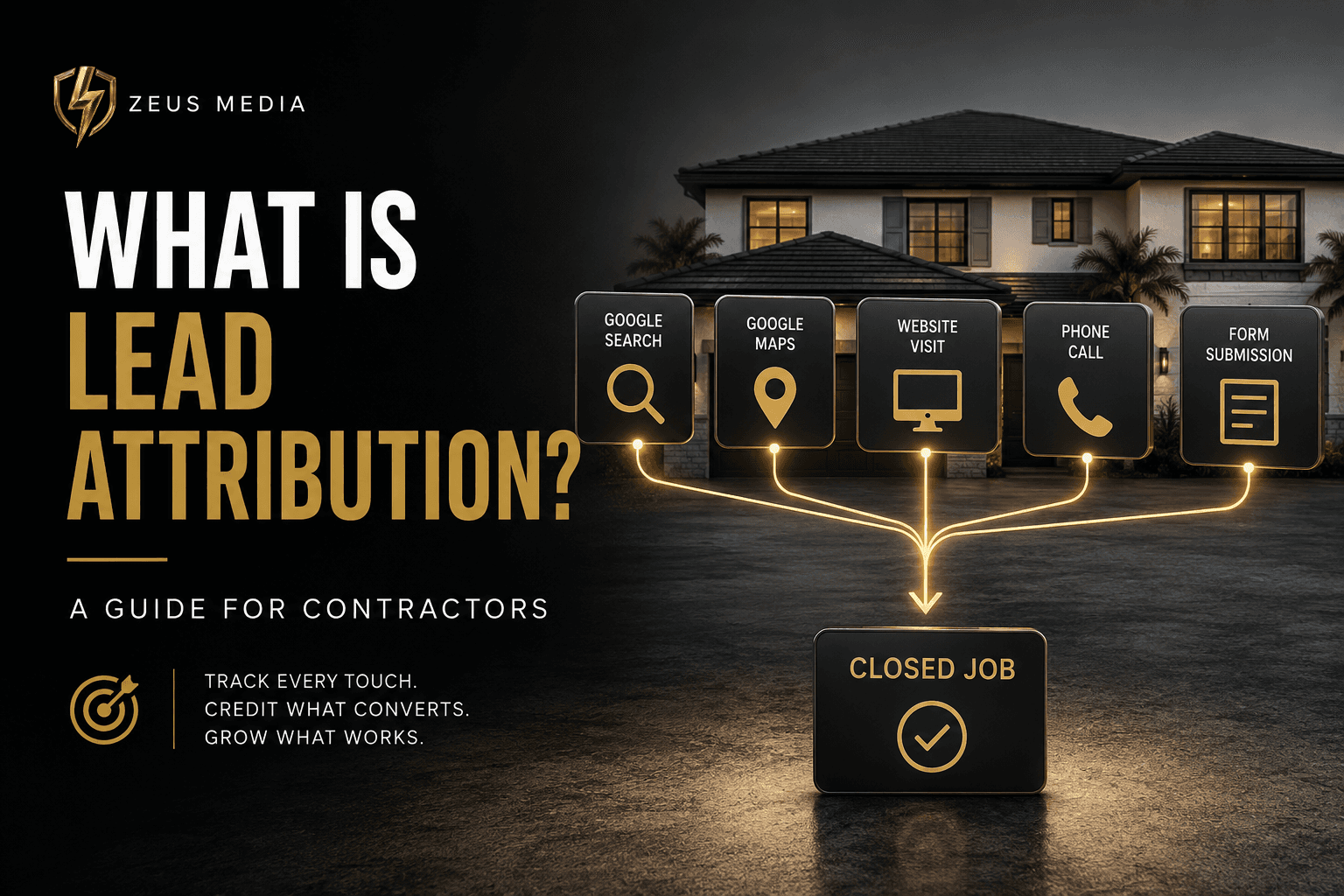
For contractors, the foundation still includes contractor website design to build trust quickly and load smoothly, a local SEO strategy for contractors to appear in search results, a well-managed Google Business Profile to strengthen local maps credibility, and lead tracking for contractors to understand where opportunities originate.
When these systems work together, contractors gain a clearer view of the entire customer journey: Search Visibility → Website Visit → Call or Form Fill → Follow-Up → Proposal → Permit → Scheduled Job → Completed Project.
That is the bigger opportunity. The strongest contractor marketing in South Florida does not stop at generating clicks. It connects visibility, lead generation, sales, and operations.
What South Florida Contractors Should Look for in AI Software
Not every platform is the right fit for every contractor. Before adopting new technology, business owners should ask a few practical questions:
Does it fit your industry? A roofing company, solar installer, HVAC contractor, plumber, and general contractor may have different workflows. The platform should reflect the way your business actually operates.
Does it integrate with your existing systems? Adding another disconnected tool can make the problem worse. Look for software that can reduce fragmentation rather than create more of it.
Can it help your team respond faster? The best technology should improve speed without making the process harder for your staff.
Does it improve the customer experience? Automation should make communication clearer, not colder.
Can it reduce administrative friction? Pay attention to the tasks consuming the most time: proposal follow-up, data entry, permitting, scheduling, dispatch, or reporting.
Does it support your service area? For South Florida home-service businesses, local permitting requirements and service-area logistics matter.
Can your team realistically adopt it? Powerful software only creates value when the team can use it consistently. The best system is not necessarily the one with the longest list of features. It is the one that helps your business operate with less friction.
Final Thoughts
South Florida contractors do not need more disconnected tools. They need systems that help them generate demand, respond faster, operate efficiently, and measure what is working.
AI for home-service businesses is moving in that direction. Platforms such as Leviosa Labs' AI operating system for home services show how construction technology is beginning to connect sales intelligence, permitting, CRM visibility, and operations. The opportunity is not limited to automation. It is about building a stronger operating foundation.
For contractors investing in growth, that foundation should include both efficient business systems and a clear South Florida contractor marketing strategy. That means improving your website, strengthening your local visibility, optimizing your Google Business Profile, and tracking every lead.
Explore more South Florida contractor marketing insights, learn more about local SEO strategy for contractors, or see how lead tracking for contractors can help your team make smarter decisions.
Joshua Johnson specializes in contractor marketing across South Florida, helping roofing, HVAC, and remodeling companies rank higher and generate more leads through local SEO and conversion-focused websites.
Related Resources